


Archive for May 18, 2025
📸 Yayuk Fitria baru-baru ini memposting foto baru
| |||||||||||||||||||||||||||||||||||||||||||||||||||||||


Why Verdi’s $6.5M Raise Matters
“When you're going through hell, keep going." This podcast is about failure and how it breeds success. Every week, we talk to remarkable people who have accomplished great things but have also faced failure along the way. By exploring their experiences, we can learn how to build, succeed, and stay humble. The podcast is hosted by author and former TechCrunch and New York Times journalist John Biggs. He also hosts the Startup Show with Grit Daily, a podcast focused on brand new startups. If you’d like to appear on Keep Going, email john@biggs.cc. If you’d like to pitch on the Startup Show, please email Spencer Hulse (Spencer@gritdaily.com). Our theme music is by Policy, AKA Mark Buchwald. (https://freemusicarchive.org/music/policy/) Why Verdi’s $6.5M Raise MattersVerdi Agriculture makes it easy for farmers to manage their water usage with AI.
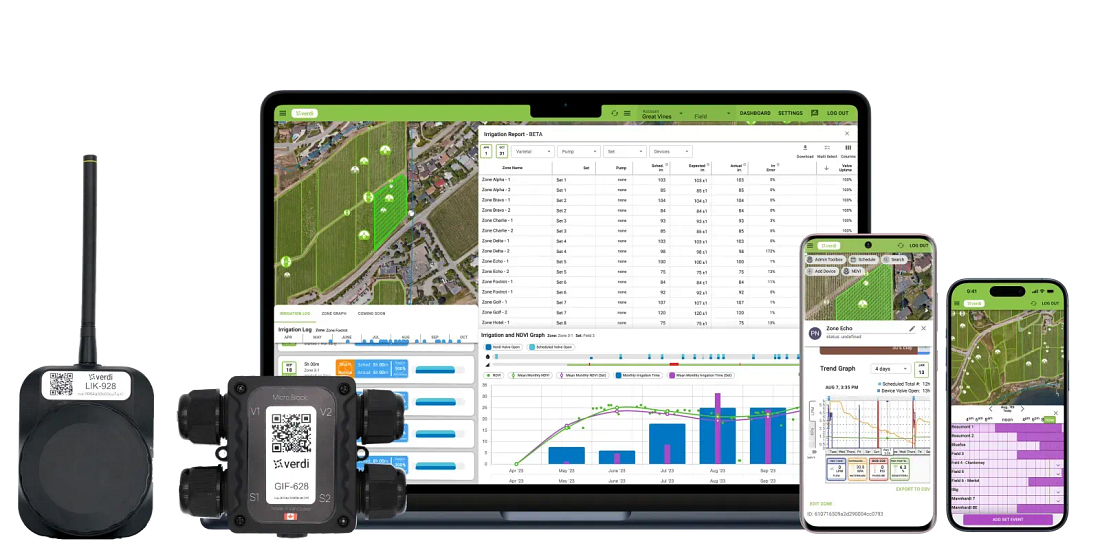
There’s a difference between solving a problem and getting people to use your solution. That’s what makes Verdi interesting. The Vancouver-based startup just raised $6.5 million CAD (about $4.7M USD) in an oversubscribed seed round to scale its irrigation automation platform. That puts Verdi’s total funding at $9.5 million—real money for a company focused on one of agriculture’s most stubborn problems: getting modern tech onto legacy infrastructure. The round was led by SVG Ventures, with participation from a long list of climate and ag-tech funds: NEC, Ponderosa Ventures, Elemental Impact, GenomeBC, One Small Planet, and others. That diversity of backers matters. It signals confidence from folks who know the long sales cycles and slow adoption curves in agriculture—and still believe Verdi can move fast. 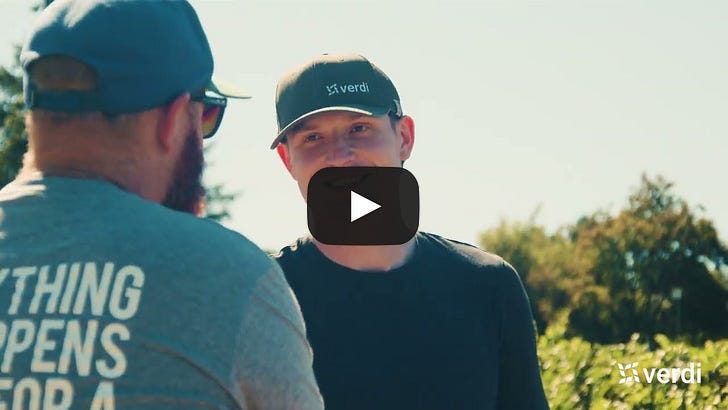 Verdi doesn’t ask farms to tear out old systems and start from scratch. Instead, it retrofits intelligence onto what’s already there. That’s how they ended up automating irrigation for 5,000 acres tied to major food and beverage brands, saving farmers over $1 million in labor costs and more than 100 million liters of water last year. It’s not flashy. But it works. That’s what makes this funding round worth paying attention to. Verdi’s not pitching a vision of some far-off farming future. They’re putting affordable automation in place today, and that’s what climate resilience actually looks like on the ground. You're currently a free subscriber to Keep Going - A Guide to Unlocking Success. For the full experience, upgrade your subscription.
|






Startup Show: When the Computer Becomes the User
“When you're going through hell, keep going." This podcast is about failure and how it breeds success. Every week, we talk to remarkable people who have accomplished great things but have also faced failure along the way. By exploring their experiences, we can learn how to build, succeed, and stay humble. The podcast is hosted by author and former TechCrunch and New York Times journalist John Biggs.
He also hosts the Startup Show with Grit Daily, a podcast focused on brand new startups.
If you’d like to appear on Keep Going, email john@biggs.cc. If you’d like to pitch on the Startup Show, please email Spencer Hulse (Spencer@gritdaily.com).
Our theme music is by Policy, AKA Mark Buchwald. (https://freemusicarchive.org/music/policy/)
Startup Show: When the Computer Becomes the User
"Data is the fuel of any AI system."
Most of us don’t think twice about how we use computers. We move a mouse, type in a form, click a button. We’ve built up decades of patterns and habits, and the machines have evolved to meet us halfway. But what if the next evolution wasn’t a new interface—but the same one, just used by something that’s not us?
That’s what Ang Li is working on. He’s the co-founder and CEO of Simular, a company building what he calls “autonomous computers.” His idea isn’t about adding more APIs or building smoother backends. It’s about making software agents that interact with the machine exactly like we do—by moving a mouse, typing into boxes, and navigating the graphical interface.
Agents that act like us, but aren’t us.
The conversation stuck with me. Partly because of the tech, which is impressive—they’re outperforming OpenAI in UI automation benchmarks. But mostly because of the philosophical weight behind what he’s building. The name Simular says it all. This isn’t human intelligence. It’s something like it. Something that mimics, that reflects.
Ang comes out of DeepMind, where he split his time between AGI research and product engineering. That tension—between theory and practice—is exactly where Similar sits. They open source their tools. They build in public. They’re not trying to lock the future into a closed-loop platform. They’re trying to make it usable now, by anyone.
What stuck with me most was his answer to the problem of trust. Most AI startups talk about full automation—hand over your tasks, and the machine will handle it all. But Ang is honest: no one is giving their Gmail password to an agent. No one is giving it their credit card. So instead of pretending the agent can do it all, Similar is building a shared workspace. You and the machine work together. You do the sensitive stuff. It handles the rest.
There’s something oddly human about that.
Maybe AGI doesn’t come in a wave. Maybe it doesn’t look like a breakthrough. Maybe it looks like a computer that clicks and types, just like we do. And maybe that’s the future: a machine that isn’t better than us, just similar.
Invite your friends and earn rewards
Invite Friends
© 2025 John Biggs
548 Market Street PMB 72296, San Francisco, CA 94104
Unsubscribe