


Archive for May 04, 2025
Crypto is Being Weaponized by the New Right. Here’s How It Happened.
“When you're going through hell, keep going." This podcast is about failure and how it breeds success. Every week, we talk to remarkable people who have accomplished great things but have also faced failure along the way. By exploring their experiences, we can learn how to build, succeed, and stay humble. The podcast is hosted by author and former TechCrunch and New York Times journalist John Biggs. He also hosts the Startup Show with Grit Daily, a podcast focused on brand new startups. If you’d like to appear on Keep Going, email john@biggs.cc. If you’d like to pitch on the Startup Show, please email Spencer Hulse (Spencer@gritdaily.com). Our theme music is by Policy, AKA Mark Buchwald. (https://freemusicarchive.org/music/policy/) Crypto is Being Weaponized by the New Right. Here’s How It Happened.How we went from real tech to rug pulls.
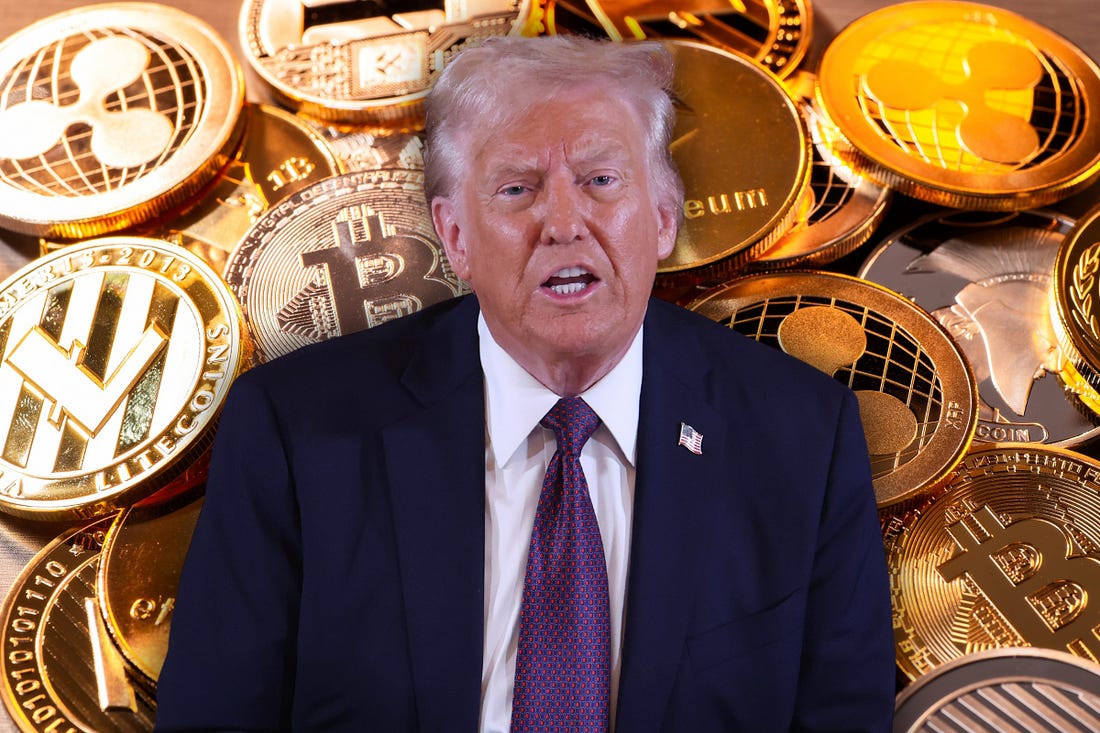
Crypto obfuscate a million sins, and we are seeing some solid grifting going on right in front of our eyes. Cryptocurrencies, sadly and unsurprisingly, are getting a bad rap under the Trump administration, and it is not going to get better any time soon. The technology — at its core the ability to send money trustlessly from person to person — is solid. I have spent most of my career working in the space, and I understand it as intimately as anyone without a computer science degree and 20 years of coding device drivers can. If Biden did any of the things I’m about to outline, they would be burning him in effigy at Buffalo Wild Wings. For Trump, it is expected. When FTX failed in 2022, I predicted that the only legitimate use for crypto in the coming decade would be to fleece the ignorant. FTX spoiled everything. FTX founder Sam Bankman-Fried was a so-called effective altruist, someone who believed that instead of donating based on emotion or habit, he would prioritize causes that offered the greatest measurable impact. This meant he made a lot of money doing crypto trades — at one point he was the 41st richest person in the world — and then screwed it all up by faking his numbers in the loose, sloppy way all crypto grifts begin. Further, the federal government has long tried and failed to regulate crypto in a way that the grifters would like. While many crypto fans argue that they want to be taxed and properly regulated, many of the worst in the industry quickly respond by simply leaving U.S. jurisdiction after whining about being forced to be responsible. For a few years, interestingly, crypto looked like it was getting bipartisan support, and even the Democrats, ever on the hunt for a few million in election funding, were looking forward to crypto windfalls. Thanks to his largesse, Sam Bankman-Fried was, briefly, a liberal darling. That all evaporated quickly when he went to jail, leaving crypto to be co-opted by the far right. This shift cemented itself in July, 2024 when Trump appeared at Bitcoin 2024. The event caters to a particularly rabid fan base of bitcoin maximalists i.e. people who think almost every other crypto is junk. As I wrote before, tech has been slowly going MAGA over the past have decade but now it is fully in the tank for Trump simply because he’s a cultural accelerant that will destroy the Old World and let Elon Musk and Jeff Bezos embed Siri directly into your amygdala. Big tech, fearing that it can no longer control our minds through little rectangles of glass we obsessively stare at for hours a day, are looking for the next big thing and it will require the SEC, the FDA, and OSHA to look the other way. So here we are in the calm before the storm. Trump, for his part, is using crypto like the consummate grifter he is, most recently selling $TRUMP shitcoins. Shitcoins are cryptocurrencies created on top of other cryptocurrency platforms, usually with little real purpose or value. They can go up in price if enough people believe they might be worth something later. In most cases, the value is not based on anything tangible — it is based on hype, speculation, and the hope that someone else will eventually pay more for the coin. Shitcoins often copy the basic features of bigger projects like Bitcoin or Ethereum but do not offer anything new or useful. They are a common way for early investors or creators to cash out once they have pumped up the price. Trump’s $TRUMP shitcoin, launched just before his second inauguration, exploded in value—briefly becoming one of the most valuable cryptocurrencies in the world. The coin’s price soared over 300% overnight, with trading volumes hitting nearly $13 billion within two days. Trump-affiliated entities reportedly held 800 million tokens, potentially worth over $50 billion, raising serious concerns about conflicts of interest and ethics violations. Critics, including ethics experts and government watchdogs, have flagged the venture as a possible violation of the Constitution's foreign emoluments clause, given the potential for foreign governments to purchase the coin and enrich the president. The launch of a second coin, $Melania, added to the controversy. Analyses suggest that while Trump and his associates profited significantly, many investors suffered substantial losses, leading to calls for investigations and legislative action to prevent such conflicts in the future. Further, Trump’s shitcoin will give its top 220 holders a dinner with Trump on May 22 at his golf club outside Washington, D.C. After the announcement, the coin’s value shot up by 50%. The value of the coin has now jumped by more than $100 million, and many $TRUMP holders are tied to foreign crypto exchanges or banned platforms like Binance. In fact, the biggest “investor” in $TRUMP is Justin Sun, the CEO of Binance. Interestingly, there is currently a massive $869 million outflow related to the $TRUMP token which means that the holders are currently selling at inflated prices to people who want to sit down with Donald Trump for bad catering and a rambling discussion on how it’s “all computer.” Trump and his team are also pushing deeper into crypto. Last month, the Trump family said it plans to launch a stablecoin through World Liberty Financial. A stable coin, is simply a coin pegged to something like the US dollar and which can be used to make cross-border transfers of so-called fiat currency without ringing bells with international banking authorities. Add in Trump NFTs - basically digital trading cards that are worthless - and Trumps partnership with Crypto.com to create a trading platform connected in some way to to Trump’s failing Truth Social. Why? One of the first things the SEC did after Trump got back into office was drop about a dozen lawsuits and investigations into crypto companies. On March 27, Crypto.com put out a press release saying the commission told them their investigation was closed. So much for regulation. To be clear, all of this grifting is very simplistic. There are plenty of people doing thoughtful, technically rigorous work in crypto—engineers, researchers, and protocol designers trying to build something useful: decentralized finance tools, censorship-resistant communications, alternative identity systems, public infrastructure. Their ideas are being flattened, ignored, or vilified through association with scammers. If FTX hadn’t imploded in such spectacular fashion, we might be talking about real regulatory frameworks by now—rules that protect people without crushing innovation. Instead, we’re stuck watching another wave of speculation driven by bad actors and political opportunists. Trump, thanks to his unique skill in stealing from his base, is using crypto as a funnel for grift during his entire presidency, with no guardrails and no accountability. Meanwhile, oligarchs, fraudsters, and lobbyists have turned this space into a cash vacuum. The right wing saw a regulatory blind spot—one the SEC and others never patched—and they drove a Brinks truck through it, collecting bags of anonymous money while the public gets a warped view of what crypto could have been. Invite your friends and earn rewardsIf you enjoy Keep Going - A Guide to Unlocking Success, share it with your friends and earn rewards when they subscribe.
|







Keep Going: Benjamin Wallace on Obsession, AI, and the Hard Truth About Creativity
“When you're going through hell, keep going." This podcast is about failure and how it breeds success. Every week, we talk to remarkable people who have accomplished great things but have also faced failure along the way. By exploring their experiences, we can learn how to build, succeed, and stay humble. The podcast is hosted by author and former TechCrunch and New York Times journalist John Biggs. He also hosts the Startup Show with Grit Daily, a podcast focused on brand new startups. If you’d like to appear on Keep Going, email john@biggs.cc. If you’d like to pitch on the Startup Show, please email Spencer Hulse (Spencer@gritdaily.com). Our theme music is by Policy, AKA Mark Buchwald. (https://freemusicarchive.org/music/policy/)
Keep Going: Benjamin Wallace on Obsession, AI, and the Hard Truth About CreativityDon't use AI... too much.
This week on Keep Going, I talked with Benjamin Wallace — author of The Billionaire’s Vinegar and, more recently, The Mysterious Mr. Nakamoto. We didn’t focus on plot or spoilers. Instead, we talked about what it means to write for a living right now, in a world that’s drowning in content and racing toward automation. Wallace is one of those writers who makes it look easy. But he’s honest: it’s not. The platforms to publish are wide open — Substack, blogs, self-publishing — but the traditional paths are narrower than ever. “It’s never been easier to publish whatever you want at any length and have worldwide distribution,” he said. “But the establishment publishing industry has never been more challenging.” We talked about the current game: you need a platform, a built-in audience, or a topic that breaks through the noise. Wallace started the Bitcoin book in 2022, when the crypto boom made it look like a broader audience was finally ready for it. Then AI exploded and sucked all the air out of the room. So why keep going? “You get a book deal,” he said, half-joking but mostly not. That deal lets you take the risk. It lets you focus. Without it, the economics just don’t work. Still, Wallace emphasized that anyone can start. His advice for new writers: don’t wait. Don’t be precious. Start a Substack, write the thing in public, and test what lands. And don’t use AI to write your pitch. “The book proposal is where you need to show what you can do,” he said. “If your pitch is written by AI, the assumption is the book will be too.” We dug into the question of AI and authorship. Could a bot have written The Billionaire’s Vinegar or Mr. Nakamoto? Probably not. “Weird books get written because someone has a weird obsession,” Wallace said. That human weirdness — that accident — is what makes good work good. AI can mimic quirks. It can’t originate obsession. This was a good conversation about what it means to write for a living right now. No hype. No hustle culture. Just a working writer telling the truth about the process. The Mysterious Mr. Nakamoto is out now. If you’ve ever wondered who Satoshi was — or what it takes to chase a mystery that might not want to be solved — it’s worth a read. You're currently a free subscriber to Keep Going - A Guide to Unlocking Success. For the full experience, upgrade your subscription.
|


📸 Dwifit baru-baru ini memposting foto baru
Meta Platforms, Inc., Attention: Community Support, 1 Meta Way, Menlo Park, CA 94025