


Archive for November 22, 2026
📷 Ahmad Taufiqi posting foto baru
|
||||||||||||||||||||||||||||||||||||||||||||||||||||||||||||||||||||||||||||||||||||||||||||||||||||||||||||||||||||||||||||||||||||||||||||||||||||||||||||||||


In Review: The Pininfarina PURA Smartwatch

In Review: The Pininfarina PURA SmartwatchThis smartwatch, selling for $185 on Black Friday, is great for classy fitness enthusiasts with smaller wrists.
Smart watches are either useful and ugly or pretty and useless. Consider the Apple Watch — it’s a lozenge of glass that marks you as someone who doesn’t actively care about watches at all, a signal to others that you’re going to be on time for your Pilates class but won’t support a wizened old Swiss watchmaker. Then consider something like the Whoop, a useless device that has no face and appears to be a brutalist bracelet that could, if you squint, act as a stylish accessory.
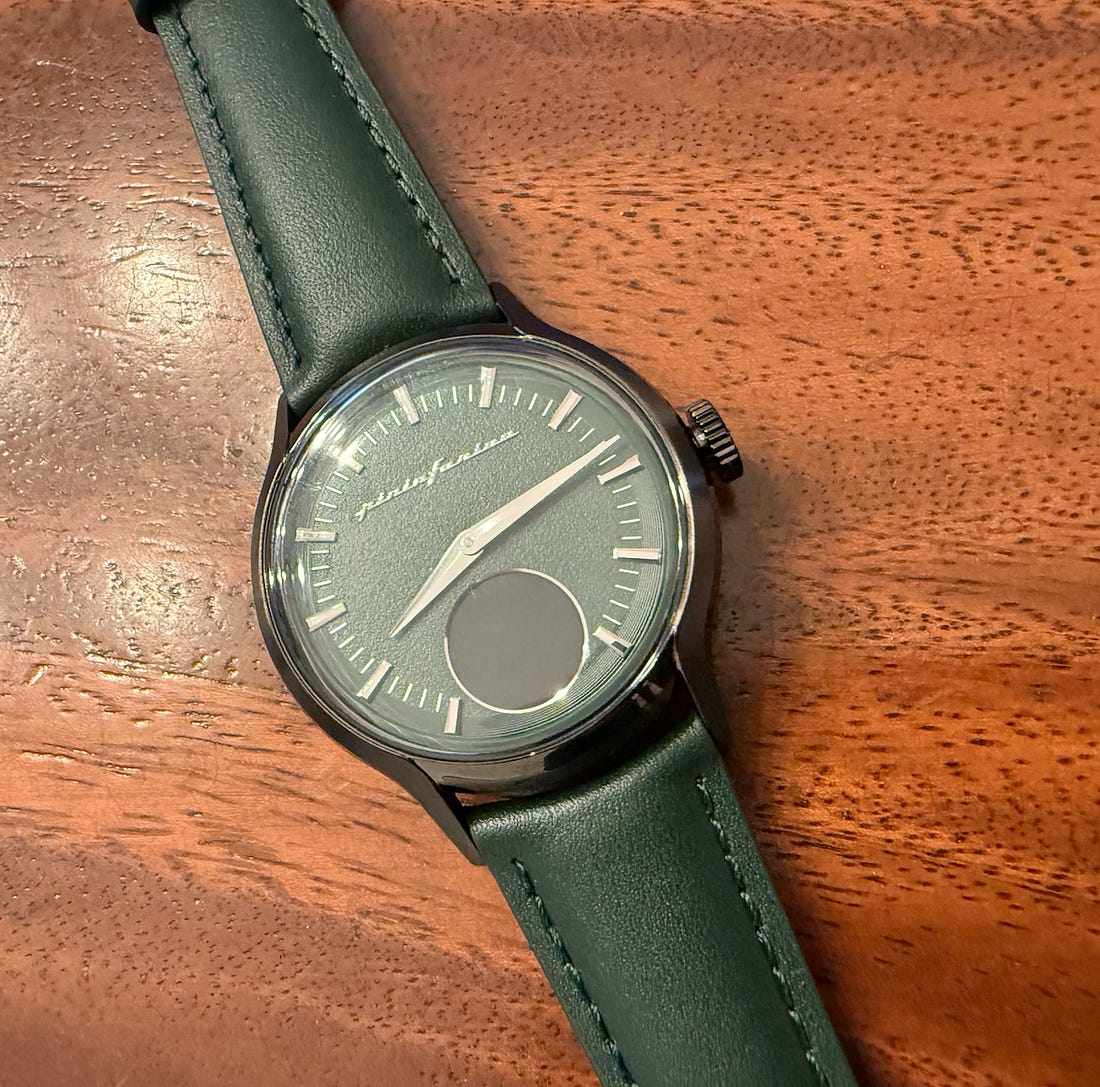
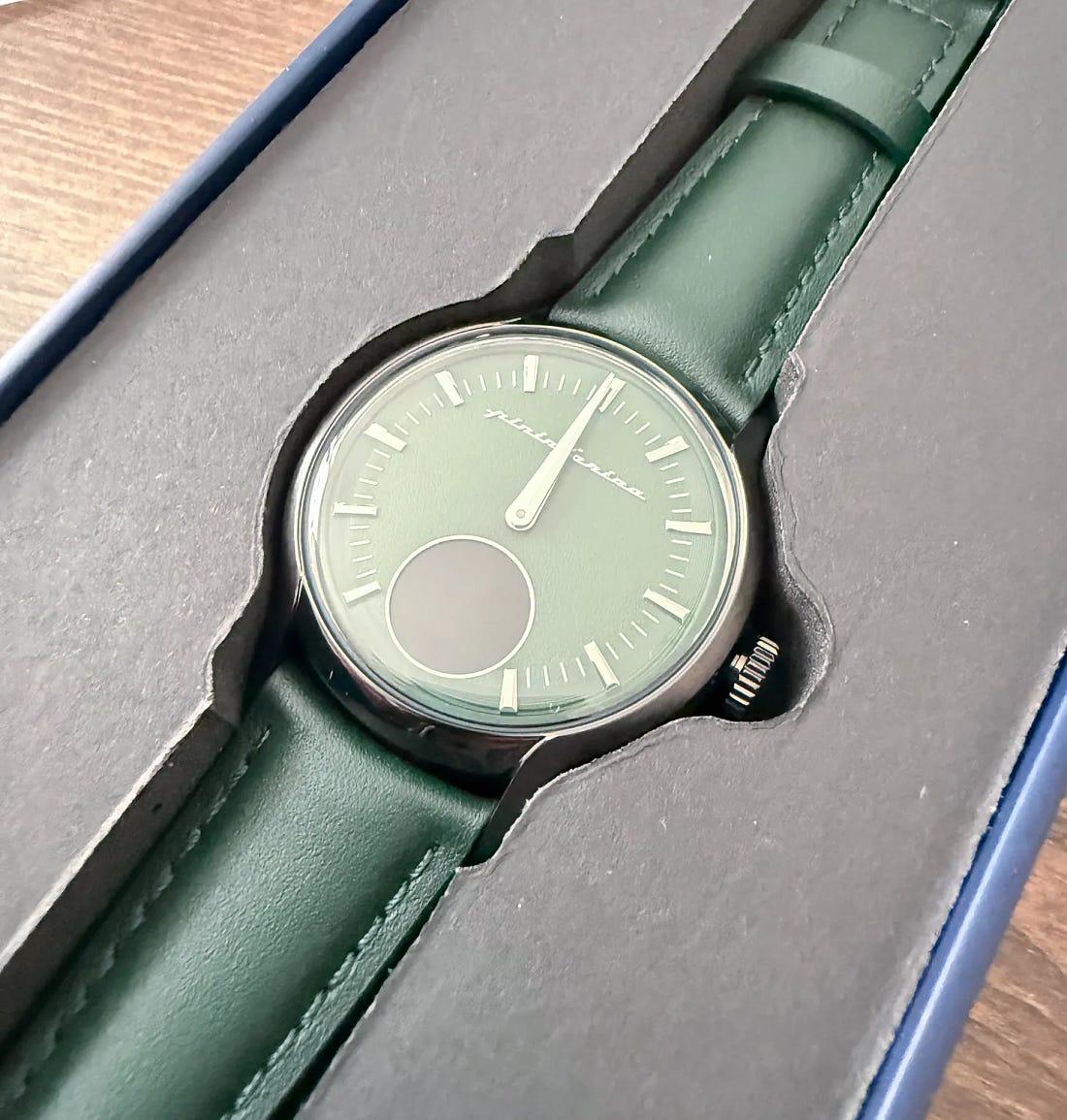
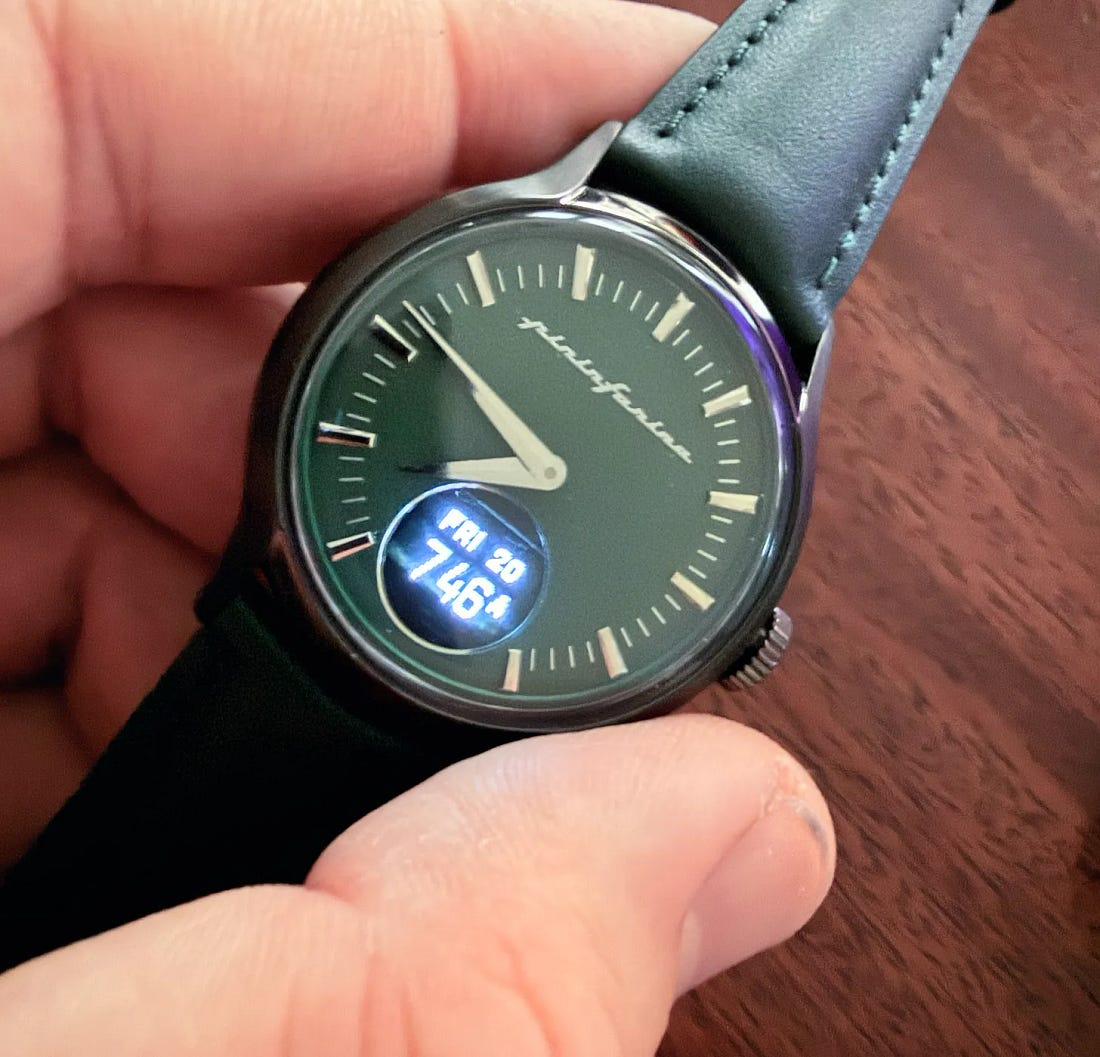
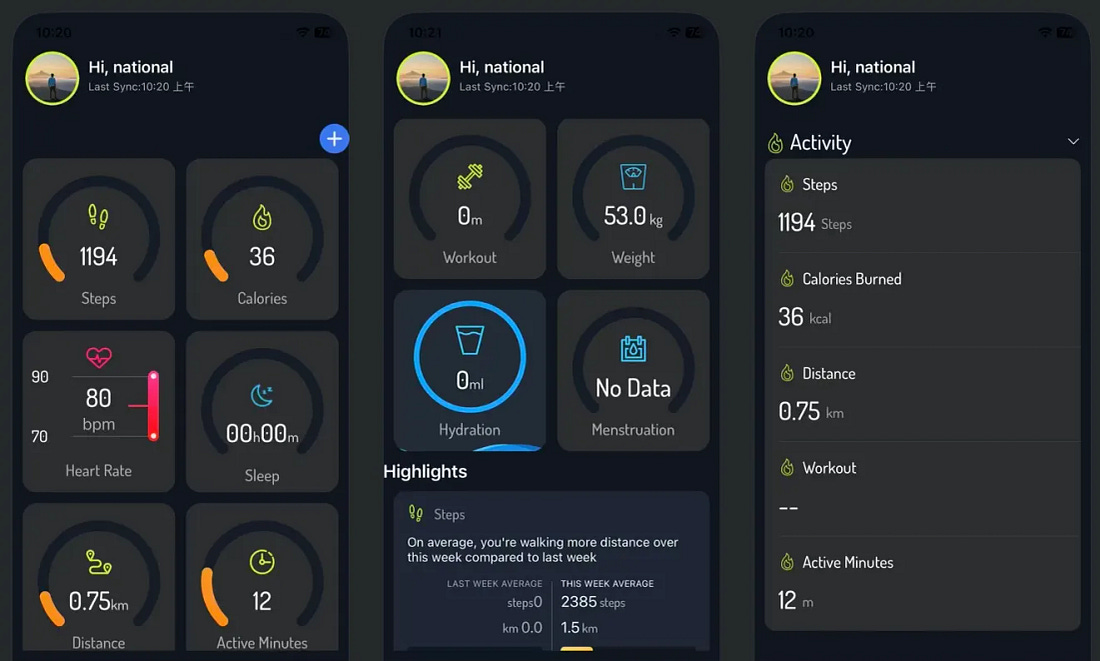
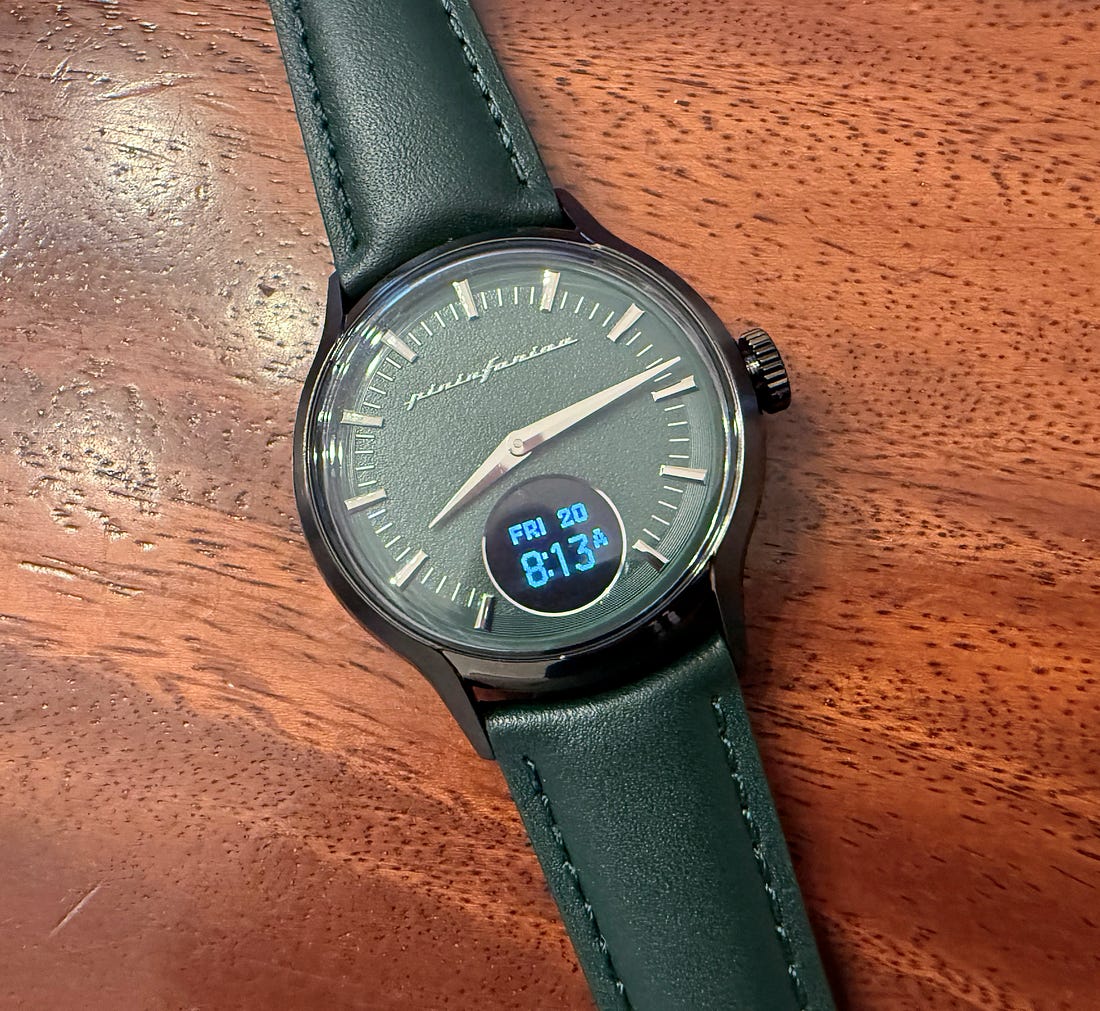
So, again, you’re either wearing something that signals you’ve given up or something that looks like a parole ankle bracelet. There is no middle ground. Or is there? The $185 Pininfarina PURA Hybrid Smartwatch combines traditional watch design with modern health tracking, offering an alternative to the oversized screens and constant notifications of conventional smartwatches. It’s basically a fancy watch with a dark OLED screen at six o’clock that shows you your notifications in a way that is unobtrusive and surprisingly helpful. The 38mm PURA features a 316L steel case, Gorilla Glass crystal, and a classic two-hand analogue display powered by a Miyota gearbox. The hands are controlled by the smart module so you never have to set the watch by hand unless it goes out of alignment. A discreet 0.42-inch OLED screen provides access to notifications and fitness information without taking over the dial. The dark steel model pairs its case with an Italian leather band for a clean, understated look. Inside, the PURA offers heart rate monitoring, blood oxygen measurements, heart rate variability tracking, stress monitoring, and sleep analysis. It also tracks steps, distance, and calories, with additional sports modes for workouts. Bluetooth 5.2 connects the watch to the Pininfarina VITA app (be sure to download the VITA, not the other Pininfarina app which no longer works), which collects health and activity data without requiring a subscription.
Perhaps the biggest selling point is battery life. Pininfarina claims up to 30 days between charges, considerably longer than most full-screen smartwatches. The watch also offers 5 ATM water resistance, vibration alerts, dual time, and three programmable alarms.
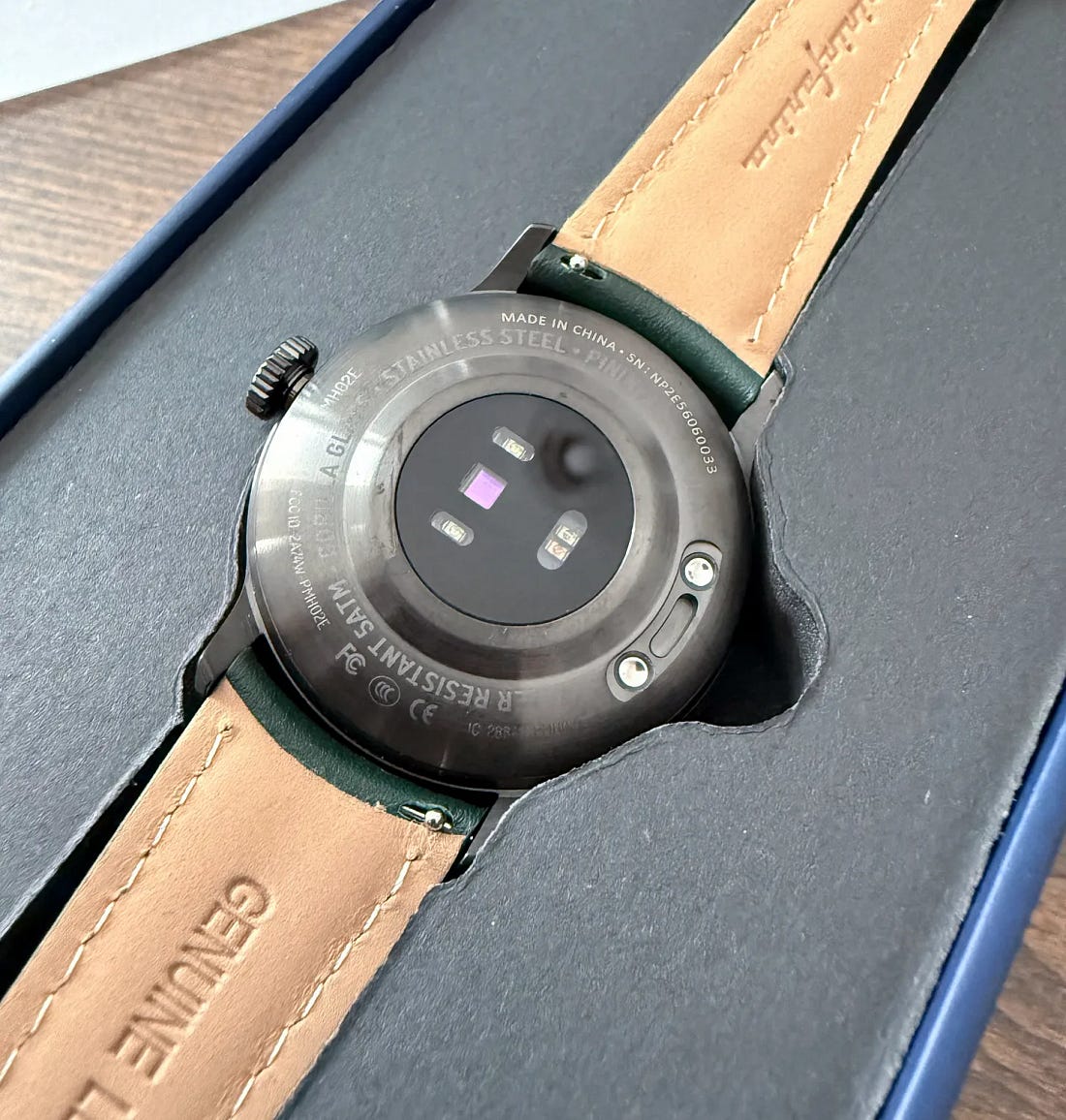
The whole package looks very Swiss. The polished hands and pips, and the deeply colored face make this look like a Corum or even an Omega Seamaster, and the nicely designed band looks nothing like a traditional smartwatch band. The back offers smaller oxygen and heart rate sensors, and the PURA’s smaller size in general makes it perfect for thinner wrists or folks who don’t want a bulky Casio smartwatch or the like.
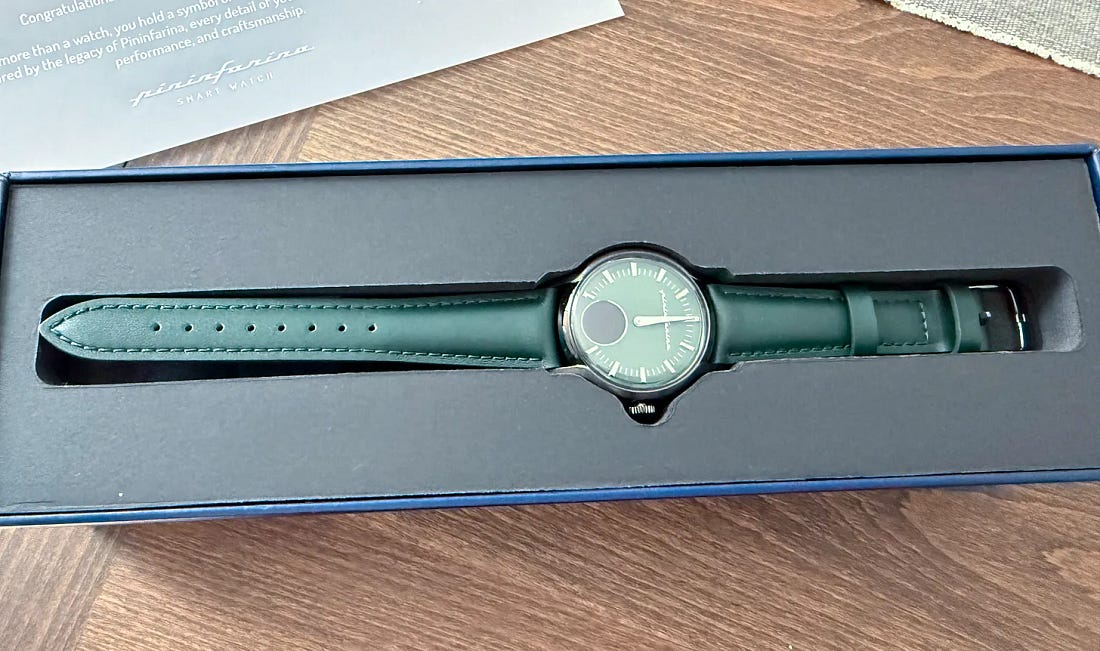
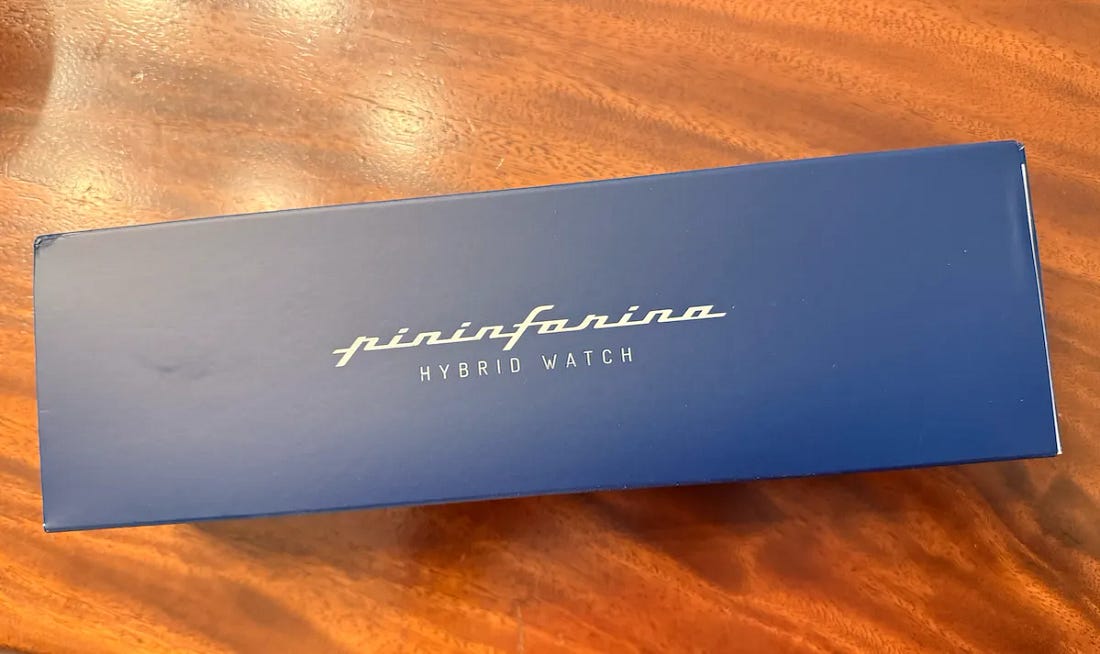
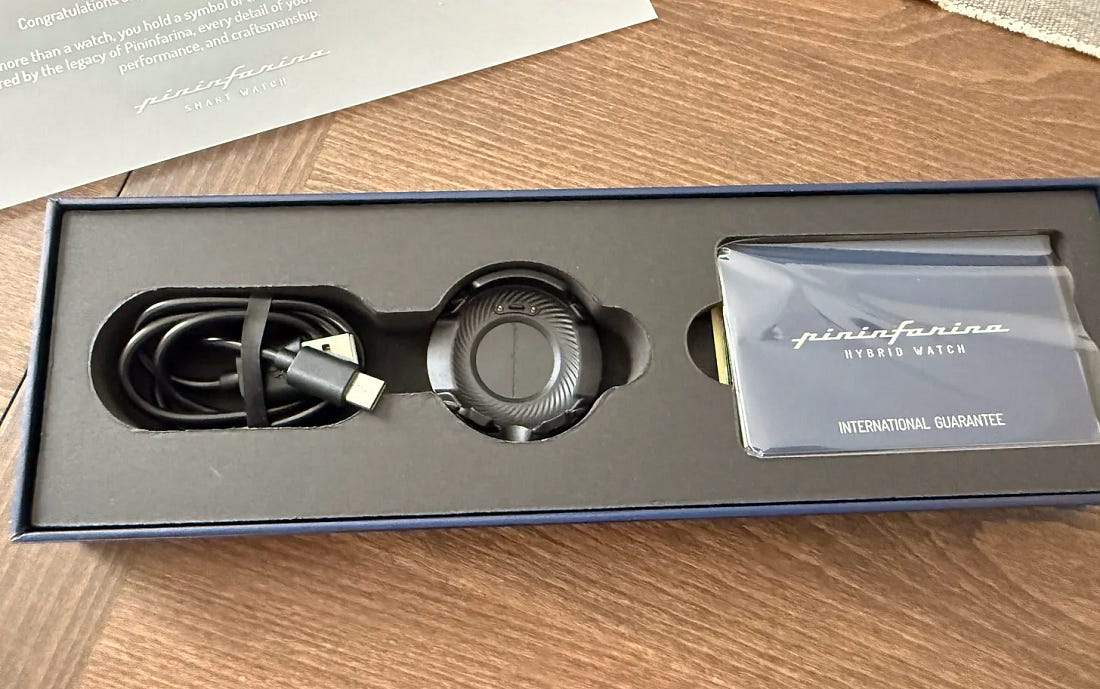
The watch comes in a very classy box that screams horology vs. reps completed. The idea of a hybrid smart watch isn’t new, but Pininfarina seems to have perfected it with a focus on style vs. tech. Even the app is just a touch classier than the normal apps you’d expect from a device like this.
I was surprisingly pleased with the PURA. As I said, I’ve seen hybrid smartwatches for years, but few of them have ever understood the assignment. People who buy these don’t want a robot turd. Instead, they want a nice watch that doubles as a health monitor. This one does exactly that in a package that screams Zurich rather than Cupertino.
Is the PURA the watch for you? If you have a smaller wrist, then absolutely. The watch comes in multiple colors and styles, and the 38mm case fits perfectly. At $185 on sale, this piece is a no-brainer for folks who are considering a smart watch and don’t want to spend big bucks on something that looks far worse. My only pet peeve? The notification signal consists of two deep buzzes every time a message comes through. Although this might not be an issue for many, I got an endless parade of notifications blasting through the watch until I finally turned most of them off. Again, this is a me problem. But with a great design, a nice band, and excellent battery life, this thing wins high marks on the usefulness and stylishness scales and puts the average Apple Watch to shame when it comes to being runway ready.
|








Why the most successful people aren’t afraid to ask for help

“When you're going through hell, keep going." This podcast is about failure and how it breeds success. Every week, we talk to remarkable people who have accomplished great things but have also faced failure along the way. By exploring their experiences, we can learn how to build, succeed, and stay humble. We are actively looking for sponsors. If you’d like to reach over 200,000 readers monthly, Keep Going is the perfect opportunity. Check out our one-pager here. If you’d like to appear on either show, email john@biggs.cc.
What separates successful people from everyone else? According to Eric Saperston, it isn’t intelligence, talent or even hard work. It’s the willingness to ask for help. Saperston learned this lesson from Donald Keough, the former president of Coca-Cola, during an unusual experiment that began shortly after college. Rather than pursue a conventional career, Saperston decided to follow the Grateful Dead, spend a ski season in Aspen and seek advice from some of the world’s most accomplished people. He funded his travels by selling grilled cheese sandwiches for a dollar, slept in his van and asked everyone from Maya Angelou and Jimmy Carter to Weird Al Yankovic and Richard Branson to sit down for coffee. The idea came from a mentor who challenged him to make his year away from school useful to others. Saperston had grown up watching his father struggle after a stroke at 28 left him partially paralysed. He understood early that life could change without warning, and he wanted to learn from people who had already faced difficult decisions. The conversations eventually became the basis for his work as a filmmaker, author, speaker and executive coach. On this episode of Keep Going, we talk about what Saperston learned from those meetings and why asking for help remains one of the most important skills a leader can develop. We also discuss the fear of being judged. Saperston argues that people often abandon their ambitions because friends and family question their decisions. Even well-meaning criticism can stop someone from trying something new. His answer is to develop a clear sense of purpose and a set of principles that can guide decisions when circumstances become difficult. Saperston now works with executives and entrepreneurs who, despite their success, still struggle with uncertainty. He believes that knowing what you want is only part of the work. You also need to explain your goals clearly enough that other people understand how they can help. We also discuss his new conversation game, Three Things, which encourages people to share personal experiences and lessons. Saperston believes that while AI can provide information, some of the most valuable knowledge still comes from talking to people who have lived through things we haven’t. It’s a conversation about ambition, rejection, mentorship and the value of listening to people who know more than you do. Learn more about Eric at ericsaperston.com and his game at liveinwonder.com. You’re currently a free subscriber to Keep Going - A Guide to Unlocking Success. For the full experience, upgrade your subscription. If you’ve been reading or listening to Keep Going for free, you’ve already seen the value of having independent work that isn’t shaped by corporate sponsors or the news cycle’s noise. But independence has a cost. If you find something useful here, if these words make you pause or think, I’m asking you to step up. A few dollars each month means I can keep doing this work without compromise. Without your support, this project stays fragile, balanced on the backs of a few.
|




📷 Aldy Winaldy posting foto baru
Meta Platforms, Inc., Attention: Community Support, 1 Meta Way, Menlo Park, CA 94025